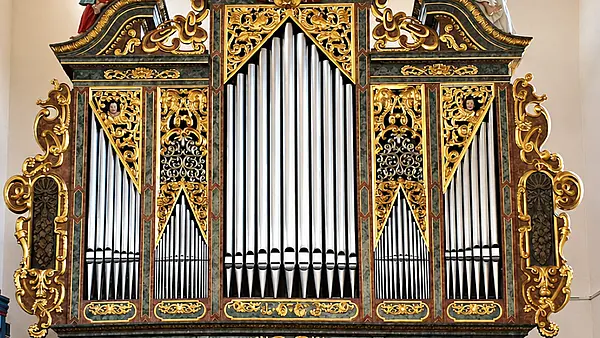
Funding line “Restoration of Historic Organs”

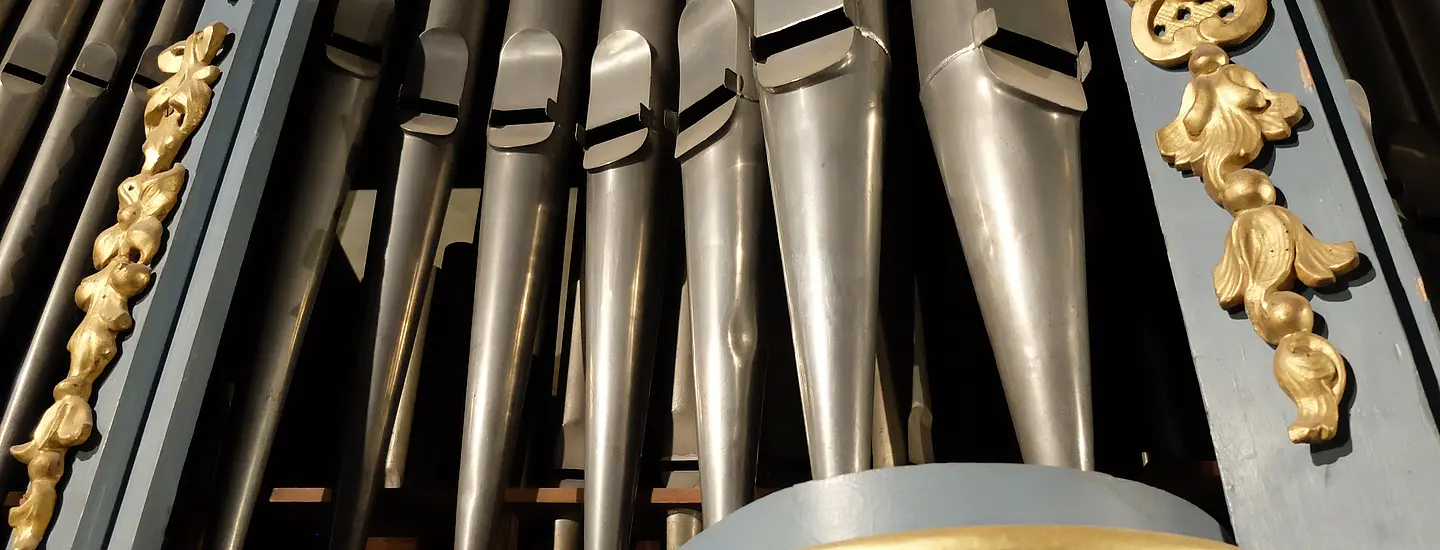
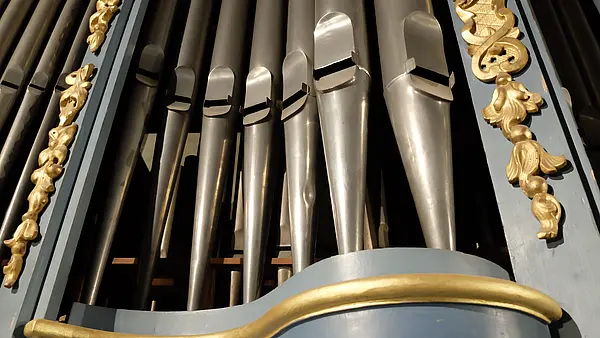
The Berthold Leibinger Stiftung is committed to preserving the organ as part of our cultural heritage. It funds the restoration and, in exceptional cases, the new construction of culturally significant instruments, with a focus on Württemberg.

© Wolfgang Adelheim

The queen of instruments

Many parishes and state-accredited educational institutions are finding it increasingly difficult to maintain their organs, some of which are highly valuable and historically significant. Even when church buildings are no longer used for worship services, the church interior with its organ often remains an exceptional venue for concerts and events. Moreover, church buildings, whose interiors are shaped by their organs, can serve as places of learning outside the classroom and make an important contribution to passing on cultural roots and identities in a multicultural society.

© Berthold Leibinger Stiftung

Concept for use

An organ is an architectural part of a church’s interior furnishings, but as a sounding instrument it offers far more. For this reason, innovative and sustainable concepts for using the organ to be restored are a prerequisite for funding. Examples might include new forms of music outreach, church or music education programs, or concert series built around specific themes or aimed at new audiences.

© Stiftsmusik Stuttgart

Partnerships

For the concepts for use to be realized over the long term, volunteer structures such as sponsoring associations or a network of partners such as (music) schools are needed. Networking is therefore also a central aspect of this funding line. Projects can often be implemented more effectively in partnership, creating lasting synergies. For extensive renovation and restoration projects as well as for music education concepts, the foundation pays attention to the involvement of a wide range of church-based as well as non-church non-profit institutions and services.

Application

The 2027 call for applications opens on October 26, 2026, and closes on February 12, 2027.

How to apply

Religious communities of any denomination that are constituted under public law and wish to carry out renovation or restoration projects on historically significant organs are eligible to apply. Non-profit support associations for organ-building projects, museums, state-accredited educational institutions, government agencies, and municipalities are also eligible. Funding is primarily provided for projects in Württemberg.

Terms of participation

Routine scheduled maintenance and cleaning are not eligible for funding.

Application documents

Applications and attachments can only be submitted via the application portal of the Berthold Leibinger Stiftung.

Process

01

Application period

The 2027 call for applications opens on October 26, 2026, and closes on February 5, 2027.

02

Selection process

The advisory board meets in March. Its members include organ consultants from the Diocese of Rottenburg-Stuttgart and the Protestant Church in Württemberg (Evangelische Landeskirche in Württemberg).

03

Announcement

Following the advisory board meeting, the Berthold Leibinger Stiftung will notify the selected applicants in writing.

Everything you need to know about the funding line “Restoration of Historic Organs”

Privacy policy

By submitting their application documents, participants agree to the conditions of participation. Legal recourse is excluded.
‍The Berthold Leibinger Stiftung may display photos and texts from the application process for the funding line “Restoration of Historic Organs” on its website and social media channels and may use, edit, and distribute them for press and public relations purposes, including through commissioned third parties. The Berthold Leibinger Stiftung may use photos and video recordings on its website or in print publications. Applicants who do not agree must object in writing to the Berthold Leibinger Stiftung.
‍Applicants consent to the purpose-specific storage and disclosure of personal data and submitted documents, as well as to the further use of their data in mailing lists. For further information, please see “Information pursuant to Article 13 GDPR.”
 

Privacy information

The following institutions and instruments were selected in 2026:

© Ev.-luth. Kirchengemeinde Aufkirchen in Gerolfingen

Orgel der Kirche St. Johannis der Ev.-luth. Kirchengemeinde Aufkirchen in Gerolfingen

Ev.-luth. Kirchengemeinde Aufkirchen in Gerolfingen

The organ in St. John’s Church in Aufkirchen was built in 1663 by an unknown organ builder for the Dominican monastery church in Eichstätt and sold to Aufkirchen following the secularization of the monastery in 1816. It has lost some of its historical integrity due to a series of alterations, most recently during the modernization in 1967. Thanks to this funding, it is now possible to restore the organ to its 1663 condition, as documented for Eichstätt, as part of the restoration project. This will preserve one of the oldest organs in southern Germany and an ideal example of an Early Baroque Catholic organ.
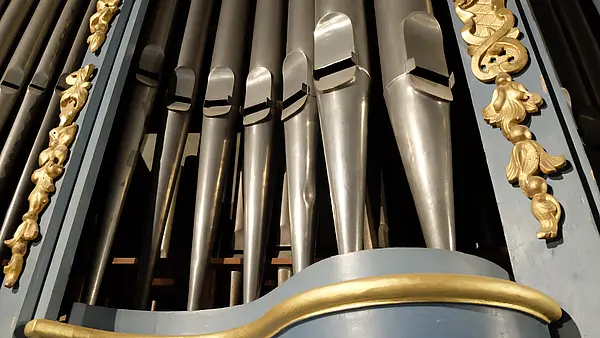
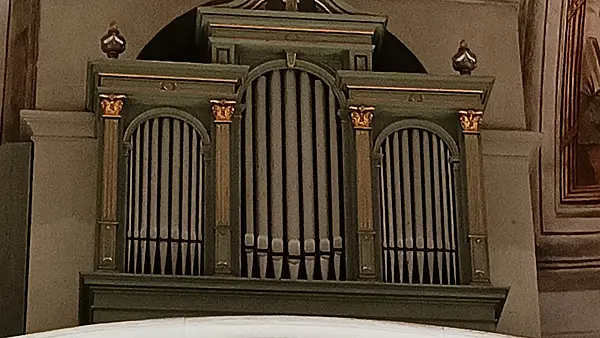
© Wolfgang Adelheim

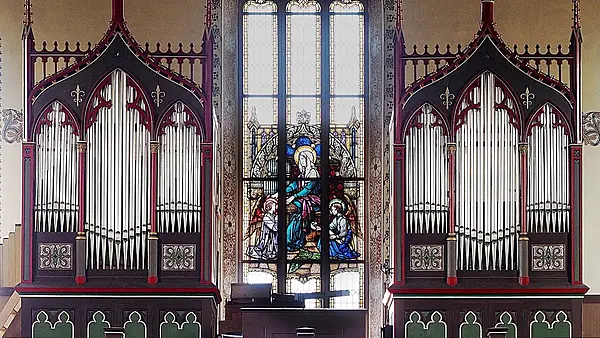
Johann-Adam-Ehrlich-Orgel in der Stadtkirche der Ev. Kirchengemeinde Bad Wimpfen

Ev. Kirchengemeinde Bad Wimpfen

The organ in the town church of Bad Wimpfen, dating from 1748, is one of the few surviving instruments built by the Ehrlich family of organ builders and is a prime example of the rich Swabian organ-building tradition of the 18th century.

© Petra Schmeißer

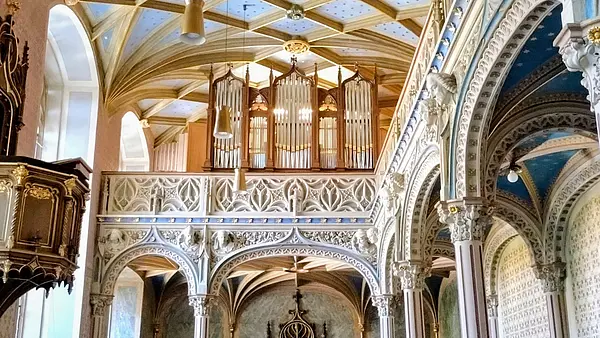
Orgel der Pfarrkirche der Kath. Kirchengemeinde Zur Heiligsten Dreifaltigkeit Meßbach/Dörzbach

Kath. Kirchengemeinde Zur Heiligsten Dreifaltigkeit Meßbach/Dörzbach

The 130-year-old Link organ in the magnificent Rococo Church of the Holy Trinity in Meßbach has been preserved largely in its original condition. It is likely one of the last instruments that the Link company built in 1893 as Opus 208, still featuring mechanical cone chests. Its condition calls for urgent and thorough restoration.

© Rudolf Schäfer

Braun-/Benz-Orgel der Kirche St. Martin der Kath. Kirchengemeinde St. Martin Zimmern-Horgen

Kath. Kirchengemeinde St. Martin Zimmern-Horgen

The instrument, originally a single-manual organ built by organ builder Anton Braun in 1830, was expanded to include a second manual in 1870 by the Rottweil-based organ builder Ferdinand Benz, of whom only one other organ has survived. It is noteworthy that the older first manual features a slider chest, while the second manual and the pedal division feature a cone chest, and that stops from the choir organ of the Villingen Minster, dating from 1583, may have been reused.

© Arnoldischule Gotha, Diana Augustin

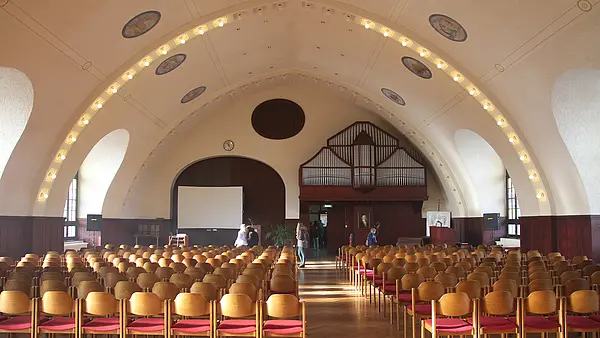
Weigle-Orgel des Staatl. Gymnasiums Arnoldischule in Gotha

Staatl. Gymnasium Arnoldischule in Gotha

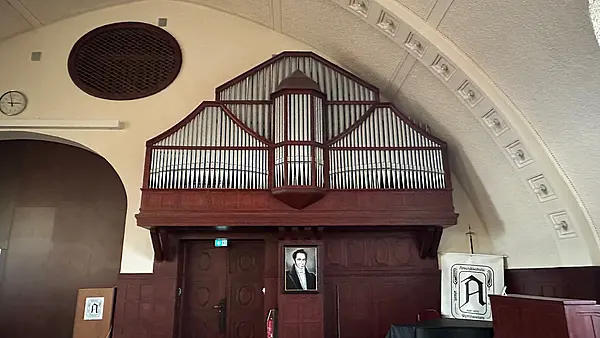
The Arnoldischule’s school organ is one of the few organs in Germany still in existence at a comparable location. Its restoration, which has now been completed, was a priority for the school, as it wanted to introduce students to the organ as an instrument. Built before World War I, the instrument has been preserved in its original condition and even has a direct connection to Baden-Württemberg: it was built by the Weigle organ workshop in Stuttgart-Echterdingen.

© Deutsches Uhrenmuseum, Matthias Hüttlin

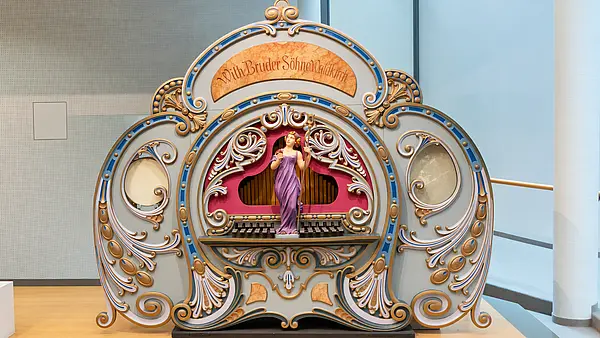
Jahrmarktsorgel im Deutschen Uhrenmuseum in Furtwangen

Deutsches Uhrenmuseum Furtwangen

The Clock Museum in Furtwangen houses a fairground organ, largely preserved in its original condition, built by the Waldkirch-based organ-building firm Wilhelm Bruder Söhne. The organ is about 100 years old. It features an elaborate Art Nouveau façade with a moving figure and is currently inoperable. Thanks to this grant, an automatic organ located outside a church setting will once again allow audiences to experience its sound and function.

© Stiftsmusik Stuttgart

Construction of a Queen Catherine Organ for the Church in the Old Castle in Stuttgart

Schlosskirche Stuttgart

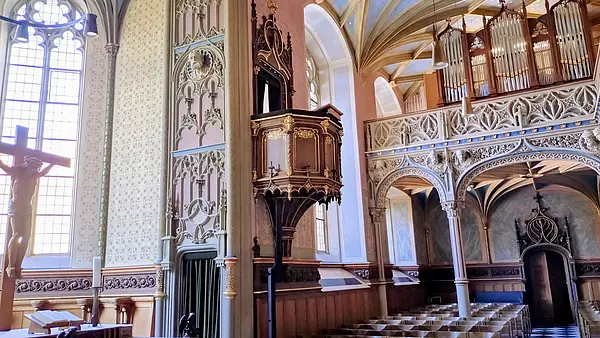
The goal behind the construction of the new organ is to transform the castle church into an appealing, vibrant venue for church music on a small, intimate scale—far more so than it has been in the past. The new organ will provide the entire parish with an attractive training center for aspiring organists. Visually, the new organ is intended to resemble the Walcker organ that was installed in 1865 as part of the Schlosskirche’s redesign and which formed a harmonious architectural unity with the church interior.

The advisory board

Stephen Blaich
Organ consultant, Protestant Church in Württemberg

Thomas Haller
Organ consultant, Protestant Church in Württemberg

Prof. Ludger Lohmann
Organ officer, Baden-Württemberg State Office for Historic Preservation

Roman Schmid
Organ consultant, Diocese of Rottenburg-Stuttgart

Antal Váradi
Organ consultant, Diocese of Rottenburg-Stuttgart