Funding line “Theater in Public Spaces”

With the “Theater in Public Spaces” funding line, the Berthold Leibinger Stiftung aims to strengthen this performative genre, which makes interventions possible in urban spaces and rural settings, because here the space is far more than a mere backdrop: by staging performances in unusual locations and through interactions that often arise from the situation itself, new audiences can increasingly be reached. In addition, by being directly involved in the theatrical action in the respective space, audiences can be made aware of sociopolitical issues in a special way and encouraged to get involved.

© Berthold Leibinger Stiftung

Current call for applications

This year’s call for applications centers on the theme of “Civil Courage”: Democracies are guarantors of freedom and human rights. The state sets the legal framework for this. Yet it is also up to citizens to defend democratic values and to develop social courage: the courage to take personal responsibility for human dignity, for justice, and for truth.

© Natalie Stanczak, sandsackfotografie

Focus

Funding is provided for theater productions that engage with historical, contemporary, or literary figures or groups of people whose courageous actions have shaped societies or even changed them for good. Examples of such role models include the White Rose, Dietrich Bonhoeffer, Rosa Parks, Nadia Murad, and Joshua Wong. Classical literature, too, features significant characters who grapple with questions of courage and moral integrity, such as Jean Valjean in Victor Hugo’s “Les Misérables” or Atticus Finch in Harper Lee’s “To Kill a Mockingbird.” The funded projects should be designed to build a bridge to the present and to make visible the significance of civil courage for how we live together in society today.

Theater and language

According to the federal association “Bundesverband Theater im Öffentlichen Raum,” theater in public spaces encompasses a wide variety of performance formats. The Berthold Leibinger Stiftung’s call for applications explicitly targets formats focusing on “Theater and Language.” Hybrid forms of theater that engage with language are also eligible.

Application

The call for proposals for 2027 begins on October 1, 2026, and ends on November 15, 2026.

Submit an application

The applying institution must be a nonprofit organization.

Application Materials

Applications and attachments may only be submitted through the Berthold Leibinger Foundation’s application portal. They must include the following documents:

  • a cost and funding plan (PDF format only)
  • a current letter of exemption (PDF format only)
Exclusion

Please note that applications cannot be submitted for the resumption of productions or for festivals as a whole.

Institutions that have already received financial support and guidance from the Berthold Leibinger Foundation in 2026 under the “Theater in Public Spaces” funding program are not eligible to apply in this call for proposals.

Process

01

Application period

The call for applications opens on October 1, 2026, and closes on November 15, 2026.

02

Selection process

The advisory board meets at the end of February 2027. It is composed of leading figures from theater practice and university teaching in the fields of directing, dramaturgy, and acting.

03

Announcement

All institutions that have submitted an application will be notified in early March 2027.

Everything you need to know about the “Theater in Public Spaces” funding line

Privacy policy

By submitting their application documents, participants agree to the terms of participation. Legal recourse is excluded.
‍The Berthold Leibinger Stiftung may show photos and texts from the application process for the “Theater in Public Spaces” funding line on its website and social media channels and use, edit, and distribute them for press and public relations purposes, including through commissioned third parties. The Berthold Leibinger Stiftung may use photos and video recordings on its website or in print materials. Applicants who do not agree must notify the Berthold Leibinger Stiftung of their objection in writing.
‍Applicants consent to the purpose-specific storage and transfer of their personal data and submitted documents, as well as to the further use of their data in mailing lists. Further information can be found under “Information pursuant to Article 13 GDPR.”
 

Privacy information

The following theater projects were selected in 2026:

Wand 5 e. V. in Kooperation mit Braun, Schäfer, Vogel (Rohrbronn)

„Ein Schiff, das sich Gemeinde nennt: Rohrbronn“

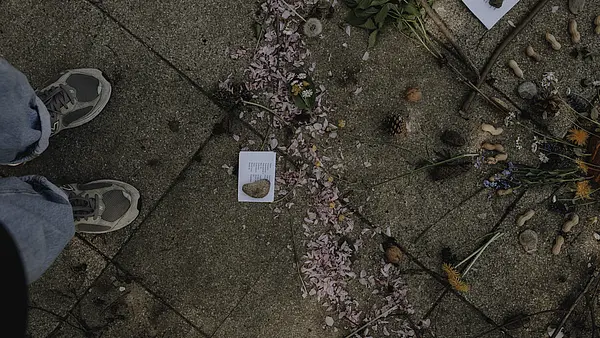
The project aims to highlight the differences and commonalities within a village community in the Remstal valley. The source material consists of videos featuring interviews conducted with a wide variety of residents of the Remshaldener district. Combined with music, these documentaries come together to form a multimedia production that artistically portrays the diverse voices, moods, and opinions regarding the present and future of this Swabian village.
© Natalie Stanczak, sandsackfotografie

Staatstheater Augsburg in Kooperation mit dem Jüdischen Museum Augsburg Schwaben (Augsburg)

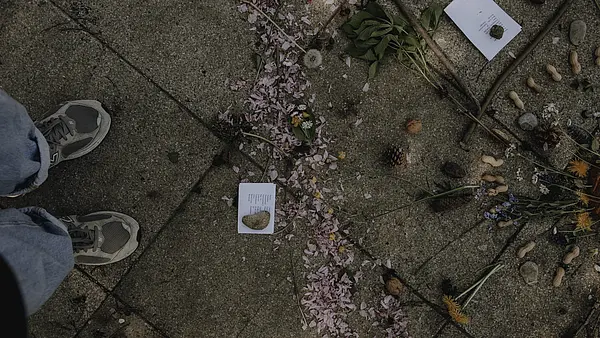
„Spuren sichtbar machen“

The augmented reality theater project brings forgotten sites of Nazi persecution in Augsburg back into our consciousness and creates a multimedia and artistic space of remembrance that allows visitors to emotionally experience these repressed places and stages of life. At ten authentic locations, users experience acted scenes, spoken texts, performative elements, and 3D reconstructions that bring the fates of persecuted victims into the present.

Frequenz-Kiel e. V. in Kooperation mit Benjamin Scheuer (Kiel)

„Die Glocken Szenen“

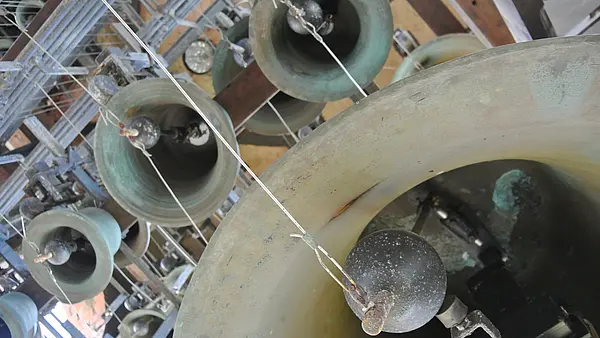
The work “Die Glocken-Szenen” by composer Benjamin Scheuer is conceived as a hybrid theater format. An actor and twelve young people from Germany and Denmark perform in the midst of the audience. The young people take on the choral parts. The central element is the carillon. Thematically, the work addresses the “bell cemeteries” of the Third Reich and applies their symbolism to contemporary conflicts and attempts to undermine democratic values.

© Berthold Leibinger Stiftung

Nesterval in Kooperation mit Kampnagel Internationale Kulturfabrik GmbH (Hamburg)

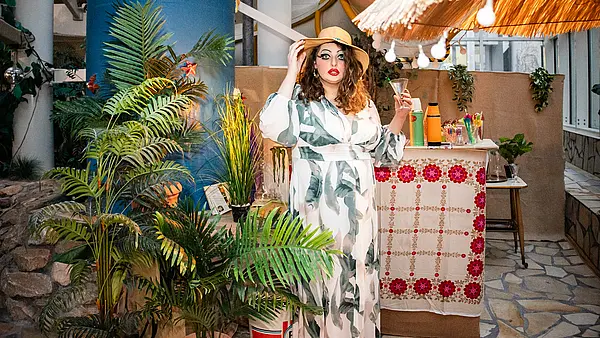
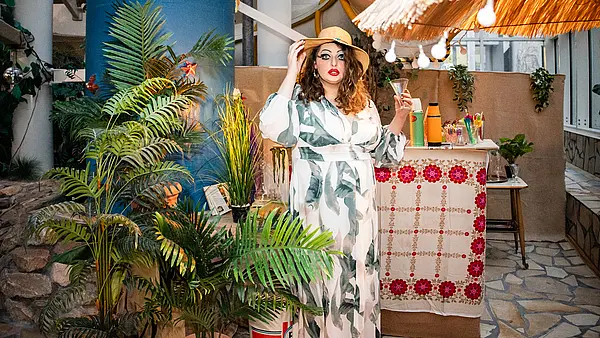
„Das Schiff“

With “Das Schiff,” the Vienna-based theater ensemble Nesterval has created an immersive theater experience that explores the global interconnections of the maritime economy. The production is staged aboard the Hamburg cultural ship MS Stubnitz. During the three-hour performance, the audience becomes part of the ship’s crew. Amid luxury and engine rooms, decadence and shipboard labor, the dark currents of the human psyche are laid bare. What begins as a supposed rescue mission turns into a journey into the inner self.

© Berthold Leibinger Stiftung

Perform[d]ance e. V. (Greifswald)

„Arena Vorpommern – Freiheit aushalten“

What does Vorpommern sound like, and how can a region sustain freedom and coexistence when conflicts become more intense, positions become more entrenched, and discourse becomes more limited? With “Arena Vorpommern – Sustaining Freedom,” Perform[d]ance, together with a broad coalition of civil society actors, invites the public to an extraordinary, two-part theater project in public spaces.

© Margarita Wiesner

Das Letzte Kleinod in Kooperation mit dem Landesverband Freie Darstellende Künste in Niedersachsen e. V. (Niedersachsen)

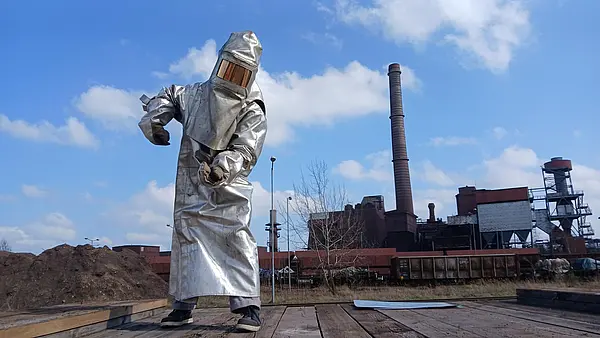
„Hüttenwerk“

Even back in the days of the GDR, there was heavy cross-border traffic: An Austrian corporation built a steel mill in Eisenhüttenstadt. Slabs were cast there and then rolled into sheet metal at the Salzgitter steel mill. The “Hüttenwerk” railway theater evokes memories of working life in the steel industry in both East and West Germany and performs on a freight train at original locations in Lower Saxony, Brandenburg, and Saxony-Anhalt.