Award Winners & Finalists

Innovationspreis &
Zukunftspreis
2000 - 2025

The archive offers an impression of the wide range of innovations in laser technology.

© Max Planck Institut für die Physik des Lichtes

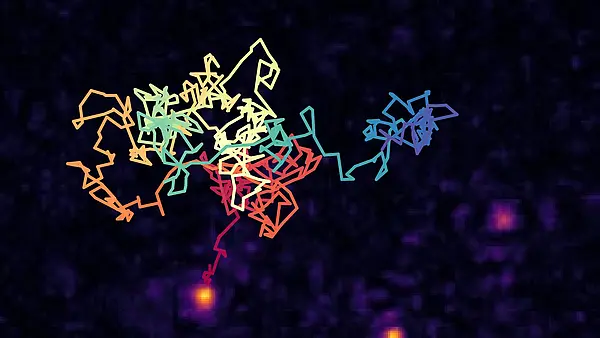
iNTA – Naoparticle Tracking Analysis

Prof. Dr. Vahid Sandoghdar, Dr. Anna Kashkanova, Martin Blessing, Dr. André Gemeinhardt, Dr. Alexey Shkarin, Dr. Tobias Utikal

Max Planck Institute for the Science of Light

Characterization of the size and material properties of nanoparticles in liquid suspensions is in very high demand, e.g., in the analysis of bodily fluids such as urine and blood plasma or of medication samples such as vaccines. iNTA is a new method that combines interferometric detection of scattered laser light with tracking analysis of single nanoparticles to reach unprecedented sensitivity and precision. A large promise of iNTA is in pharmaceutical and colloidal research as well as quality control in the (bio)chemical production line.
Portrait on YouTube

Current finalists of the Berthold Leibinger Innovationspreis

© Berthold Leibinger Stiftung

Prof. Dr. Jun Ye

JILA, NIST and University of Colorado, Boulder, CO, USA

Optical Clocks and Frequency Metrology

Jun Ye conducts research at the University of Colorado Boulder, the National Institute of Standards and Technology (NIST) and JILA. In 2025, he was awarded the Berthold Leibinger Zukunftspreis; in 2026, he was awarded the Wolf Prize in Physics.
Portrait on YouTube

© Max Planck Institut für die Physik des Lichtes

iNTA – Naoparticle Tracking Analysis

Prof. Dr. Vahid Sandoghdar, Dr. Anna Kashkanova, Martin Blessing, Dr. André Gemeinhardt, Dr. Alexey Shkarin, Dr. Tobias Utikal

Max Planck Institute for the Science of Light

Characterization of the size and material properties of nanoparticles in liquid suspensions is in very high demand, e.g., in the analysis of bodily fluids such as urine and blood plasma or of medication samples such as vaccines. iNTA is a new method that combines interferometric detection of scattered laser light with tracking analysis of single nanoparticles to reach unprecedented sensitivity and precision. A large promise of iNTA is in pharmaceutical and colloidal research as well as quality control in the (bio)chemical production line.
Portrait on YouTube
© Carl Zeiss Meditec AG

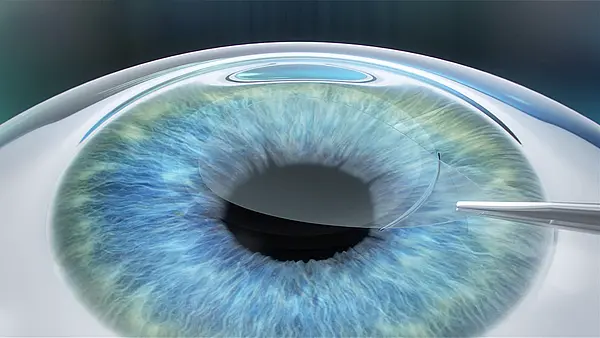
SMILE Procedure with Femtosecond Laser Keratome VISUMAX

R&D Project Team HORUS

Carl Zeiss Meditec AG

Good vision is crucial for quality of life, but global myopia is on the rise. Laser vision correction can provide a permanent solution. The minimally invasive SMILE procedure developed at ZEISS uses ultra-short laser pulses to separate a thin tissue lens within the cornea, which is then surgically re- moved through a small incision. The femto-second laser keratome VISUMAX achieves the precision required for creating the three-dimensional cuts in the cornea by combining laser technology with advanced optics and modern computer control.
Portrait on YouTube

© Nagoya University

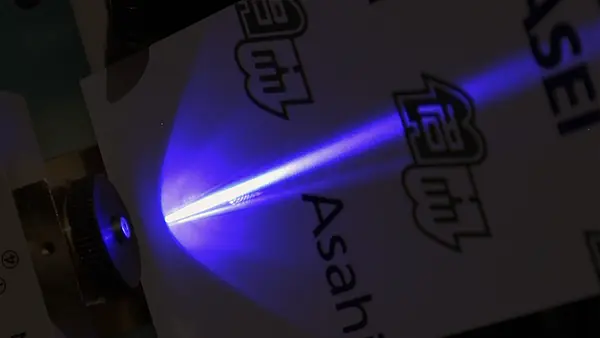
Deep-Ultraviolet Laser Diodes

Prof. Dr. Hiroshi Amano, Dr. Maki Kushimoto, Dr. Chiaki Sasaoka, Dr. Akira Yoshikawa, Dr. Ziyi Zhang

Nagoya University, Asahi Kasei Corp., Ultec Inc.

The aluminum nitride-based deep ultraviolet (DUV) laser diode achieves continuous-wave lasing at room temperature at a wavelength as short as 274 nm. This breakthrough provides a compact and highly efficiet DUV light source, surpassing conventional technologies and opening up new possibilities across various fields These smaller and more energy-efficiet DUV sources are expected to revolutionize applications ranging from healthcare and sterilization to advanced industrial uses such as microscopic particle detection, mobile bio-/chemical sensing, semiconductor lithography, and material processing.
Portrait on YouTube